What is GEO and what can you do about it yourself? A guide for small businesses without a marketing team
GEO means making sure ChatGPT, Claude, Gemini and Perplexity name your business. You can do most of the work yourself. You cannot measure it with one look at your own ChatGPT: of 68 businesses we measured, 29 were named by no AI chat at all. SiteOptima wasn't named either.

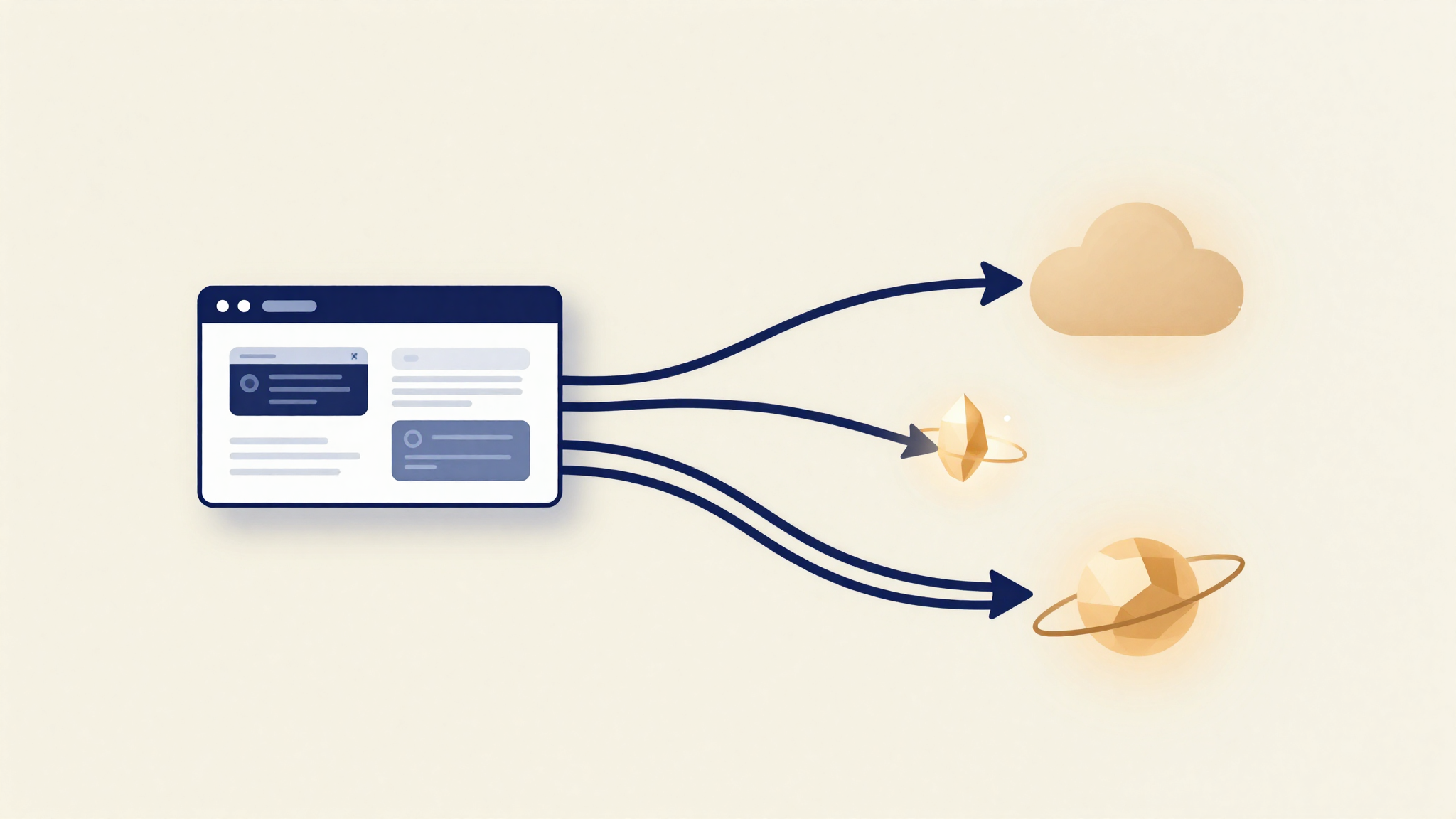
You hear the word from an agency, a colleague or on LinkedIn: GEO. You have no marketing team and little time. You want to know whether you need to do something with it and what you can do yourself. That is what follows, with what we measured ourselves, including about our own business.
What is GEO?
GEO (Generative Engine Optimization) is setting up your website so AI chats like ChatGPT, Claude, Gemini and Perplexity name your business when someone asks for a recommendation.
It has nothing to do with geography. It is about the question someone types into a chat: who would you recommend as a plumber in Waalre? The chat usually answers with three or four names. If you are not among them, you do not exist for that person.
How it differs from SEO
| SEO | GEO | |
|---|---|---|
| Where you want to be | In Google’s search results | In an AI chat’s answer |
| What it gets you | A click to your site | A mention, often without a click |
| How many spots | Ten blue links per page | Usually three or four names |
| How you measure it | Google Search Console | Asking the same question in several chats, more than once |
A good SEO foundation helps with GEO: a fast site, one page per service, a completed Google Business Profile. But it is not the same thing. You see that best in how the chats differ from each other.
Whether SEO or SEA is paid, and what SEO covers, is explained in our knowledge base.
What our measurement shows
Since July we have been asking several AI chats the same kind of question for businesses in the region, such as best optician in Valkenswaard?. Of the latest measurement per business, 68 are usable.
- 29 of the 68 were named by no chat at all.
- 14 of the 68 were named by every chat we asked.
- It differs a lot per chat. ChatGPT named the business in 29 of 68 cases, Claude in 22 of 68, Gemini in 22 of 52 and Perplexity in 11 of 37.
Being in ChatGPT does not mean you are in Claude. And the other way round.
We did it for ourselves too. On 25 October we asked the four chats: best seo agency in Eindhoven? SiteOptima was named by none of the four. Together they named nine other agencies, and no agency came back in more than two chats. A week later, on 1 November, the same question in three chats again gave zero. We write about GEO and are not yet named in it ourselves. That is exactly why we measure instead of assume.
The websites themselves also show where it goes wrong. Of 245 sites in the region we scored on GEO, half scored 33 or lower out of 100. 66 sites had no Schema.org markup at all, the code that tells an AI what kind of business you are. We found an FAQ block with markup on 30 sites.
Why your own check misleads you
Many business owners we talk to have tried it once. They ask ChatGPT about their own business, see their name at the top and conclude they are fine. That is understandable, but it is not a measurement. Your logged-in ChatGPT knows you, your history and your questions. A new customer asks logged out and with a different question. They get a different list.
On top of that, looking once tells you little. For one practice we asked the same question every week for two months, and the result swung between 25 and 100 percent.
The other objection we often hear: business is going well, we have plenty of work. That may be true. But it says something about your customers today, not about whom an AI chat will recommend tomorrow to someone who does not know you yet.
What you do yourself this week
You do not need a marketing team for the first step. Two things are enough.
1. Run one clean test. Open a private window, do not log in anywhere and ask ChatGPT, Claude, Gemini and Perplexity the same question the way a customer would: who would you recommend as a [your trade] in [your town]? Write down per chat which names appear. Repeat it a week later. Now you know where you stand and who your competitor is in the chats.
2. Change one thing on your site. Pick one from this list:
- Say in one sentence at the top of your homepage what you do, where and for whom. Not a slogan, a fact: Plumbing company in Waalre for leaks and boiler maintenance in the Eindhoven region.
- Put the five questions customers ask you most, with a short answer, on the page for that service. Have FAQPage markup added to it.
- Have LocalBusiness markup added to your homepage, with your name, address, phone number and opening hours. What that looks like is in the Schema.org guide.
- Fill in your Google Business Profile completely, with services and a few recent photos.
Time for a second step? An llms.txt is a short file that tells AI crawlers what your site is about. Whether it increases the chance of a mention has not been proven. It does not cost you much, though.
When help pays off
Copy and questions you can do yourself. Help pays off in two places. The technical side, such as markup that is correct and that Google and the chats actually read. And measuring: more than once, in several chats, with the questions your customers ask. That is what we do. It is also how we found out we are not named yet ourselves.
What these numbers do not prove
The businesses we measured are our leads and clients, not a sample of all small businesses. Most were measured once. We know a single measurement can be far off. Gemini and Perplexity were asked less often than ChatGPT and Claude. And nowhere do we prove that being named by an AI chat brings you customers. What we do show: being named is not a given, it differs per chat and your own ChatGPT will not tell you.
Want to know what the AI chats say about your business right now? Run the free website check or book a half-hour call via siteoptima.nl.
Frequently asked questions
What does GEO mean?
GEO stands for Generative Engine Optimization: setting up your website so generative AI, such as ChatGPT, Claude, Gemini and Perplexity, names your business in its answer. The abbreviation has nothing to do with geography.
What is the difference between GEO and SEO?
SEO aims for a spot in Google's search results, where someone clicks through to your site. GEO aims for a mention in an AI chat's answer, which often names only three or four businesses. A good SEO foundation helps with GEO but is not enough: in our measurement a business was named by one chat and not by another.
How can I improve GEO?
Put your key facts on your site as short sentences: what you do, where and for whom. Answer the questions customers actually ask on the page itself, with FAQPage markup. Add LocalBusiness markup and keep your Google Business Profile complete. Then measure logged out in several AI chats, not in your own logged-in ChatGPT.
Can you do GEO and SEO yourself?
Mostly, yes. Rewriting copy, answering questions and filling in your Business Profile is something any business owner can do. The technical side, such as Schema.org markup, is harder. Hardest of all is measuring: one check in your own ChatGPT tells you little. That is where help pays off.
My business comes out on top when I ask ChatGPT. Does that mean I'm fine?
Not necessarily. Your logged-in ChatGPT already knows you and tailors its answer to that. A new customer asks logged out and with a different question, such as who they would recommend as an installer in Veldhoven. Ask that question yourself a few times, logged out, in several chats, and only then draw a conclusion.
Ready to be found by AI?
SiteOptima helps SMBs in and around Eindhoven become visible in Google and in ChatGPT, Gemini, and Claude. Start with a free audit.
Start free audit →