The fuss about Jetten is not about Jetten
232 posts by the Dutch prime minister and his party turn out to have been written with AI. Most of the outrage that followed is not about him. It is the same discomfort as in 1998, when people on the street saw no point in owning a mobile phone. What is left once you strip that discomfort out, and which rule still holds in five years?

It was in the paper on Thursday
De Volkskrant analysed 1,812 posts by prime minister Rob Jetten and his party D66 from 2021 onwards using the AI detector Pangram, supervised by three experts. Of those, 232 came back as written with a language model, 68 on Jetten’s own accounts and 164 on the party’s. From 4 June 2025, the day after the Schoof cabinet fell, it was about 30 percent of the posts examined. As a control they ran nearly 700 posts from before ChatGPT existed. Not one of those got the label.
What followed was predictable. Robo Jetten. Who are we actually looking at here. Is this the prime minister or a chatbot.
And somewhere there is a business owner who finally thought, last month: I am going to try this, I have plenty to say and I just never get it onto the page. They read this and think: never mind.
That is a waste, because most of that outrage has nothing to do with Jetten.
In 1998 nobody saw the point of a mobile phone
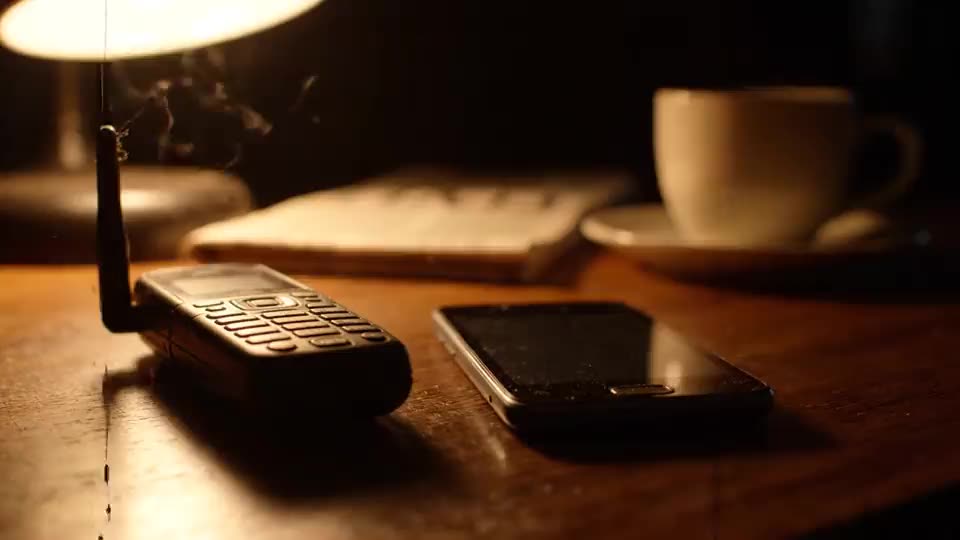
In 1998 the Dutch documentary maker Frans Bromet stood on the street with a camera and asked people whether they felt any need to make phone calls on the move. They did not. Why would you want to be reachable while doing the groceries. Who exactly do you need to speak to on a train. The clip became famous in the Netherlands precisely because it is so uncomfortable to watch now.
Nobody in that clip was stupid. They honestly described what they could see at the time: an expensive device for people who think rather a lot of themselves. That it would turn into something else entirely was not visible from where they stood.
That is how you are looking at AI writing text right now. And the figures say you are early rather than late. Statistics Netherlands measured that in 2024, 22.7 percent of companies with 10 or more employees used AI technology, almost 9 percentage points more than in 2023. The category this article is about, generating language automatically, sat at 12.3 percent and nearly tripled in one year. Among the smallest companies, 10 to 19 employees, it was 17.8 percent. More than four in five of your peers have not started.
One thing about this comparison does not hold, and I would rather write that down myself than have you spot it. Bromet is proved right because the mobile phone won. I come back to that at the end.
Strip the discomfort out and something remains
If adoption were the whole story, the conclusion would be: relax, in five years nobody will care. I do not believe that, because then the apology to the Moluccan community would have been fine too.
Look at which posts drew the strongest reactions. Not the ones about a subsidy scheme or a debate. It was the war in Ukraine, the MH17 memorial and that apology. On his personal accounts, 41 of the 68 posts contained the word I.
That is where the line runs, and it does not run between human and machine. It runs between two kinds of text.
For a post about a scheme you can decide whether it is right. You know what the scheme does, you read the text back, you take out what is untrue. Phrasing is the only thing you handed over, which is exactly what a copywriter used to do.
For a memorial there is nothing to read back. The material is the feeling itself. You cannot supply condolence for someone else to put into good sentences, because then the sentences are all there is. A professor put it more sharply in the NOS piece than I can: a language model produces a kind of desirable emotion, not necessarily what you actually feel.
This is not 2026 squeamishness that will pass. A reader who senses the feeling was not yours feels cheated, whether that happens in 2026 or in 2031.
Every number comes from your own measurement or a source you checked
Which leaves the question of what a business owner should do with this. Two rules, small enough to remember.
The first: every number in your text comes from your own measurement, or from a source you checked yourself. A number you cannot trace back goes out, however nicely it reads.
That sounds like an attitude and it is plain work. This article contains three numbers that are not mine. All three went through that rule, and all three came back different.
22.7 percent. That figure about AI use in business drifts across dozens of pages, usually without a source and sometimes as a slightly different number. I looked it up at Statistics Netherlands itself. That immediately showed what it covers: companies with 10 or more employees, measured over 2024, with the smallest companies lower. Which is a different claim from “a quarter of companies use AI”, the version you read everywhere.
232 posts. Here checking meant asking not whether the number exists but what it is. It is what a detector returned on 1,812 posts, not a confession by D66. That changes what you are allowed to assert with it, so that is how it appears above.
The year 1998. I had that Bromet clip filed in my head as something from the 1980s. That is almost twenty years off. A year you write down from memory is exactly that kind of number: it sounds right, nobody trips over it and it is wrong. In a piece holding the prime minister to a standard of verifiability I cannot afford it.
Notice where it could have gone wrong in all three cases. Not in what a model or a newspaper writes, but in how easily you adopt it and put your name underneath. A number that sounds right slides into your own text faster than one you have to look up. That is the same thing that happened to Jetten, only larger, and with a newspaper doing the checking afterwards.
The second rule follows from the first: whatever you write in the first person has to be something you actually think or saw yourself. Grief, pride, regret, a thank you: you write those yourself, even clumsily. Clumsy and real reads better than smooth and borrowed.
What is wrong with this article
Four things, because this piece is about honesty and I can hardly leave the objections out.
The Bromet comparison was picked with hindsight. That clip is funny because the mobile phone won. Nobody plays a clip of people being sceptical about the fax machine, about Google Glass or about 3D television, even though the mockery of the doubters sounded exactly the same there. They laughed at X back then proves nothing about AI. It explains why people are indignant now. It does not prove they are wrong.
The 232 is an estimate, not a confession. Pangram is a detector. D66 confirmed that AI was used, not that all 232 texts came from it. I can cite that number and I should not lean on it as though somebody counted.
Maybe the line simply moves. If in five years nobody blinks at a condolence phrased by a model, then my rule about the first person was adoption discomfort too and not a principle. I cannot refute that. I do not think so, because there is a name underneath, but I do not know.
And we sell this. SiteOptima helps business owners publish in exactly this way, so I am not neutral here. Read the piece with that in mind.
What it comes down to
The question being asked this week is: did he use AI. That is the same question as in 1998, when it was about whether you really needed to be reachable out on the street. In five years nobody will ask it any more.
The question that will still be asked is a different one. Where does that number come from, and was that feeling yours?
Answer those two and you do not have to wait for the discomfort to pass. You can start on Monday.
Frequently asked questions
Can I have AI write my LinkedIn posts?
Yes, as long as you supply what goes in them. The difference is not who types the sentences but who decided what the post claims. Bring your own example, your own figure and your own judgement and the post is yours. Ask for a post on a topic and you get what everyone gets.
So what did Jetten actually do wrong, in your view?
Not the use of AI. What grates are the posts about the war in Ukraine, the MH17 memorial and the apology to the Moluccan community. In texts like those the feeling is the material. There is nothing to supply, so there is nothing to decide either. On top of that, 41 of the 68 posts on his personal accounts contained the word I.
Does an AI detector prove a text was written by AI?
No. A detector gives a probability and it misses in both directions. De Volkskrant did the work carefully, using nearly 700 posts from before ChatGPT as a control, none of which got the label. D66 confirmed that AI was used, but not that all 232 texts came from it. So 232 is an estimate, not a count.
Am I late if I am only starting with AI now?
No. Statistics Netherlands measured that in 2024, 22.7 percent of companies with 10 or more employees used AI technology, almost 9 percentage points more than the year before. Among the smallest companies, 10 to 19 employees, it was 17.8 percent. So more than four in five have not started, while text generation nearly tripled in a single year.
How do I keep an invented number out of my text?
Ask where every figure in your own text comes from and accept only your own measurement, an invoice, a report or a source you looked up yourself. It sounds strict and it is one extra question per number. A number you write down from memory does not count as a source: the year in this article was almost two decades off until I checked it.
Ready to be found by AI?
SiteOptima helps SMBs in and around Eindhoven become visible in Google and in ChatGPT, Gemini, and Claude. Start with a free audit.
Start free audit →